Emerging in the 1960s, the collectives Archigram and Superstudio responded to the pop-art, space-age zeitgeist with speculative visions for architecture defined by high-tech megastructures. Disseminated through proposals, exhibitions, publications, and films, their ideas challenged how cities—and life within them—might be imagined.
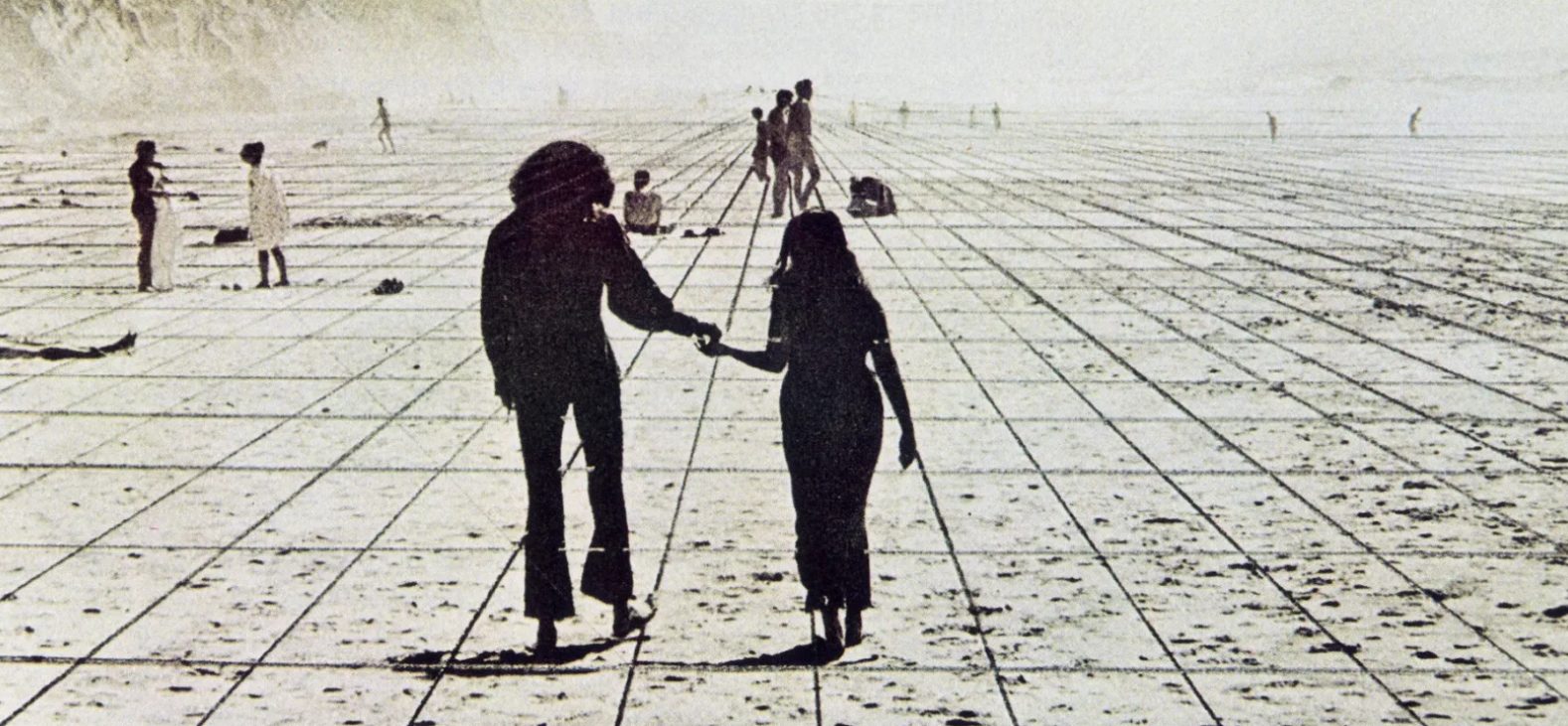
Founded in 1961 in London, Archigram embraced media culture, disposability, and science fiction, proposing concepts such as walking cities and plug-in cities composed of modular pods. In contrast, Florence-based Superstudio (founded in 1966) offered a critical counterpoint, satirising techno-utopianism through projects like Continuous Monument, a ‘negative utopia’ critiquing contemporary urban planning.
This presentation includes a 1967 television program outlining Archigram’s philosophy and two Superstudio manifesto films: Supersurface: An Alternative Model of Life on Earth (1972) and Ceremony (1973).
Image: Superstudio