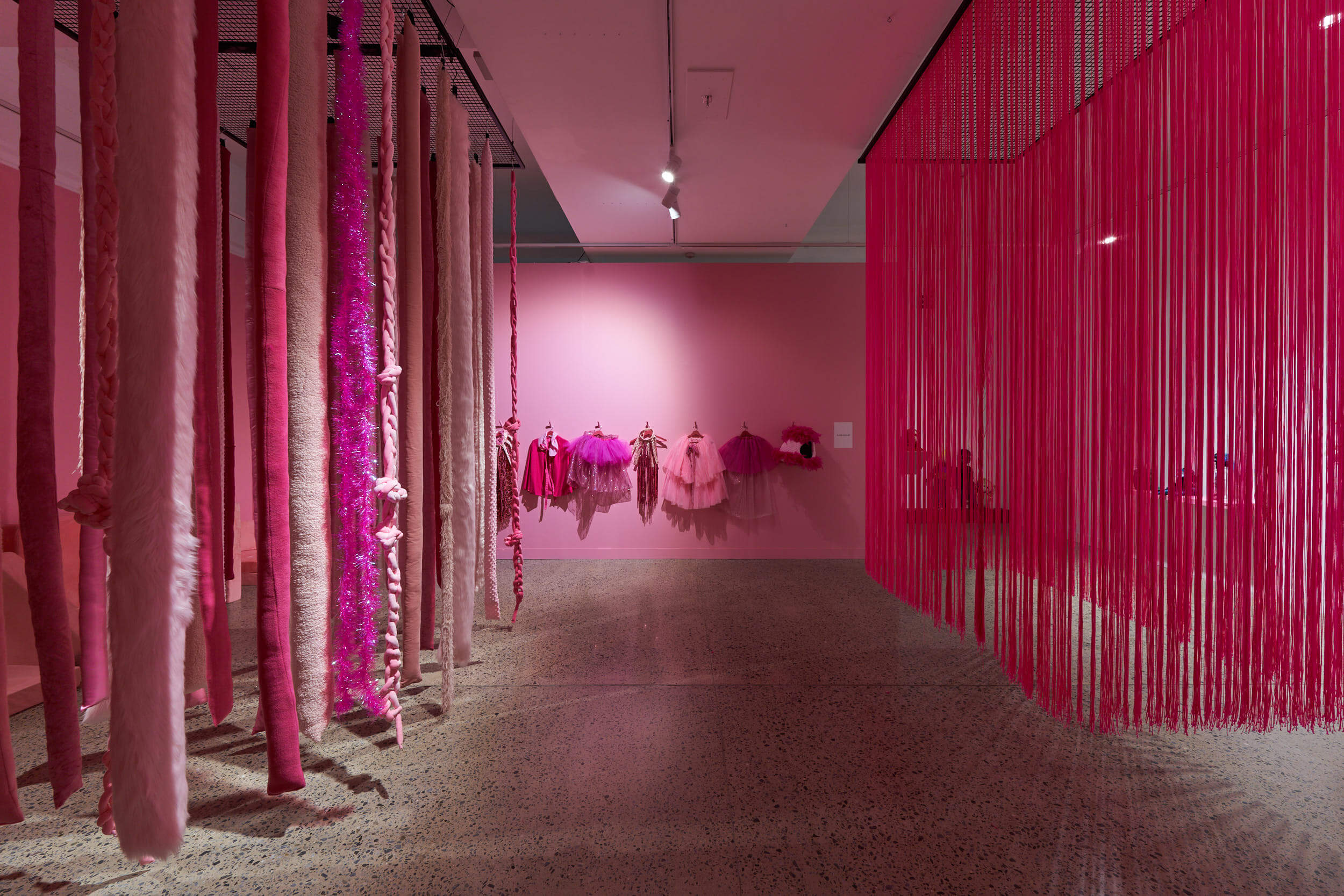
Can Touch This is a tactile, participatory installation that invites audiences into intimate encounters with texture, sensation and proximity. Created by regional Queensland artist Shan Michaels in collaboration with the BLV (blind and low vision) community, the work reimagines touch as both material and metaphor, exploring access, desire and refusal.
Through soft sculptural forms and playful provocation, Michaels’ unsettles assumptions about contact, control and embodied agency. Visitors are invited to deprioritise sight – leading their experience in the space through touch, and immersion in the sensory soundtrack developed by collaborating composer Antony Abbracciavento. Through a series of tactile environments, soft-sculptural-play & seating, and wearable costumes, Can Touch This shifts focus away from the visual in this visual art exhibition.
Shan Michaels is a queer textile artist from regional Queensland whose practice explores how ordinary objects become repositories of memory, identity and belonging.
Working with reclaimed domestic materials and stitched language, she creates tactile artworks that invite participation, reflection and dialogue. Through a practice that is both tender and radical, she uses softness as a methodology for reclaiming stories, expanding access and reimagining care.
As the mother of a legally blind child, Michaels has developed a long-standing relationship with the blind and low vision community, which continues to shape her collaborative and accessible approach to making.
Antony Abbracciavento is an Adelaide based classical composer with a passion for film soundtracks and dramatic sonic experiences. Despite having severely low vision Abbracciavento is able to compose music in interesting ways, such as using Braille notation and working with virtual midi/audio instruments. Abbracciavento frequently exposes himself to a range of musical genres. He always tries to find the story and origins in a piece of music, deepening his understanding of how music can tell a story in different contexts, with emphasis on providing a human element. Even when composing incidental music such as soundtracks, Abbracciavento always strives to let the music tell the story on its own through a range of musical and sonic techniques, such as exploration of timbre, theme and variations. This approach to composing allows the music to be its own thing as well as an accompaniment, ensuring a wider audience can engage with the journey his music will take them on.