
Sally M. Nangala Mulda lives at Abbott’s Town Camp, near the riverbed of the Todd River in Mparntwe (Alice Springs). Born in Titjikala, 130 km south of Mparntwe, she went to school in Amoonguna. Her childhood wasn’t stable because she had difficulties with her vision and lost the use of her left arm due to an accident. Time went on, and Sally moved closer to town with her family, eventually settling in Mparntwe.
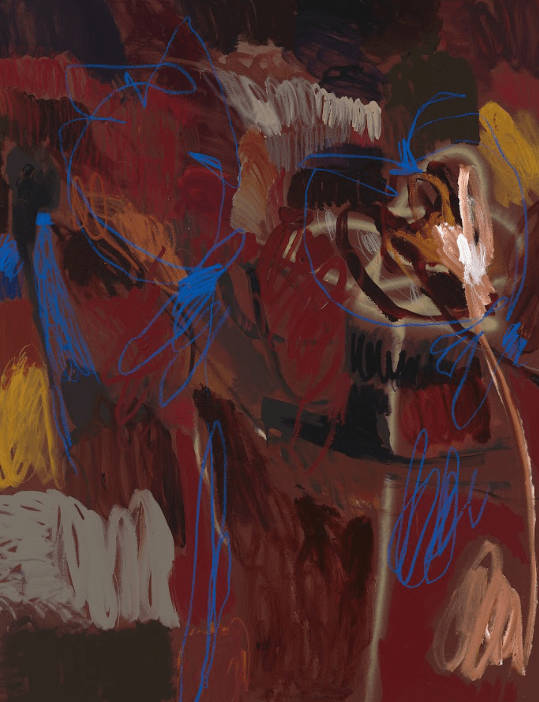
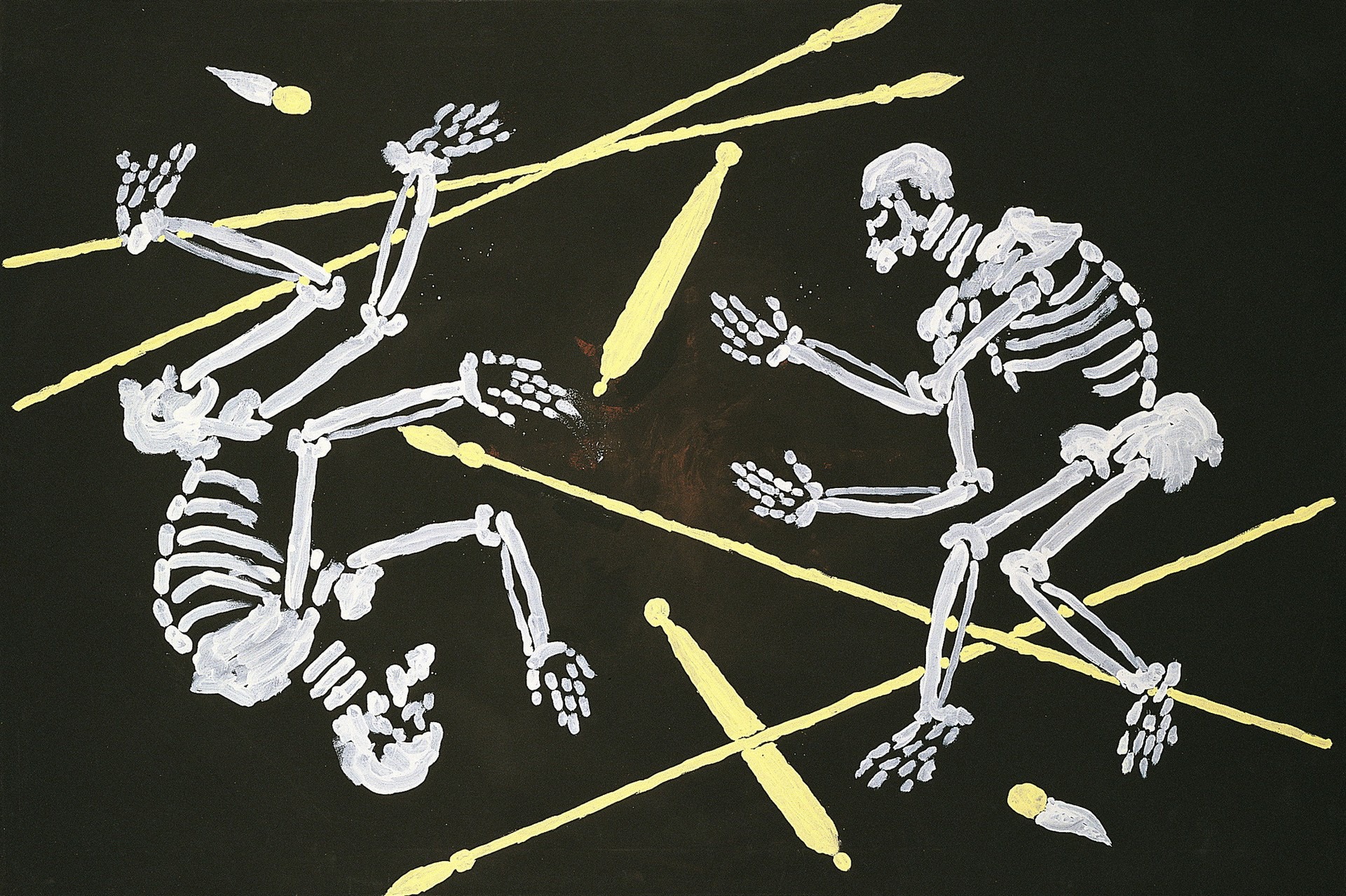
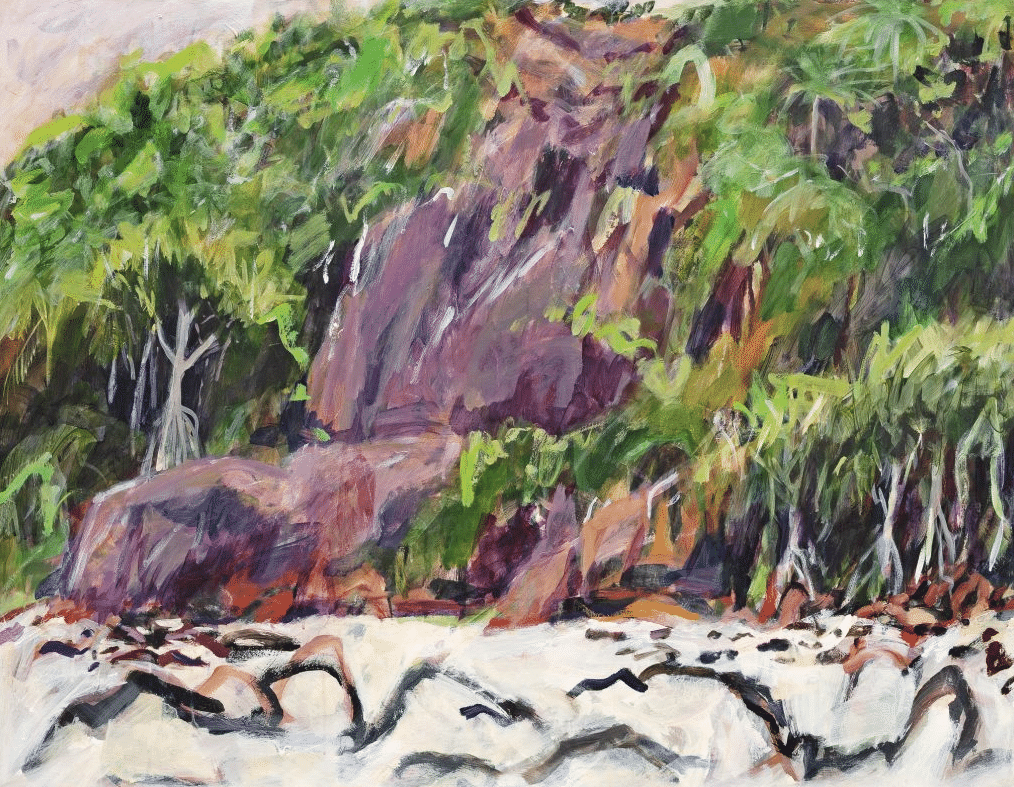
Sally is known for her figurative and naïve painting style. She uses bright colours roughly applied across the canvas to illustrate her world; from the ranges that surround Mparntwe in the background, to the trees, saltbushes, homes, waterholes, shops, figures and animals that populate each scene. Sally includes text in cursive script that is unique to her practice and acts as an introduction to the painting’s subject. She doesn’t mince her words; she is brutally honest about the presence of police, alcohol consumption, and people sleeping outside because they don’t have enough money to pay for a power card to connect electricity to their homes. She contrasts this with text about people doing everyday activities like shopping, sleeping and cooking food, indicating just how ingrained and ‘normal’ confronting situations such as a constant police presence are in her world. Her paintings are stories from her lived experience and from the many Town Camp residents who face the same social and political issues.
Early in her career, Sally struggled because of her compromised vision but following surgery she gained confidence and has since developed her own dynamic and fluid style. Many of her paintings are about the contact between the Indigenous community and the Northern Territory police. Sally paints these stories with pain, but it gives her a release to be able to share them. The NT Intervention, a 2007 Federal Government policy program that was brutal in its enforcement and roundly prejudicial in its targeting of Indigenous communities, dramatically changed the lives of First Nations Australians in Mparntwe and elsewhere. New laws and regulations, including restrictions on the sale of alcohol, were enforced, jobs were cut and employment programs were discontinued. This caused overcrowding in most Town Camps, which hasn’t improved. (1) Sally describes this increase of police presence: ‘More humbug from policeman. Why we not allowed to buy alcohol? Or drink it at home in our own place like everybody else?’ (2)
In the NT, your eligibility to purchase alcohol depends on your address. If you live in a remote or Town Camp community, you are not permitted to buy and consume alcohol. These restrictions tend to cause a lot of humbug for alcohol and other possessions within the town. Most of the time alcohol is consumed due to joblessness, homelessness, and the pain and grief that our people suffer.
Despite the hardship, Sally enjoys staying in Abbott’s Town Camp surrounded by her Luritja families. It’s her home away from home.
Sally fills the gallery walls with the stories most are not willing to tell – not with the intention to guilt an audience, nor with a conscious decision to be a political artist, but simply by painting what she experiences. These are her true stories.
Notes
(1) ‘The number of drinking spots around Alice Springs has spiralled and this has led to an increase in intoxicated people on the camps’. ‘Impacts of the NTER’, Review of the Northern Territory Emergency Response, Australian Human Rights Commission, 2008, retrieved 23 August 2018, https://www.humanrights.gov.au/northern-territory-emergency-response-review-board
(2) ‘Humbug’ is a term used by Aboriginal people to describe the act of constantly hindering a person or peoples for something they may or may not have to give away; interview between the artist and author, August 2018.
Written by Terazita Turner-Young
Image: Monday Pay Day 2024, acrylic on linen, 76.5 x 152.5 cm