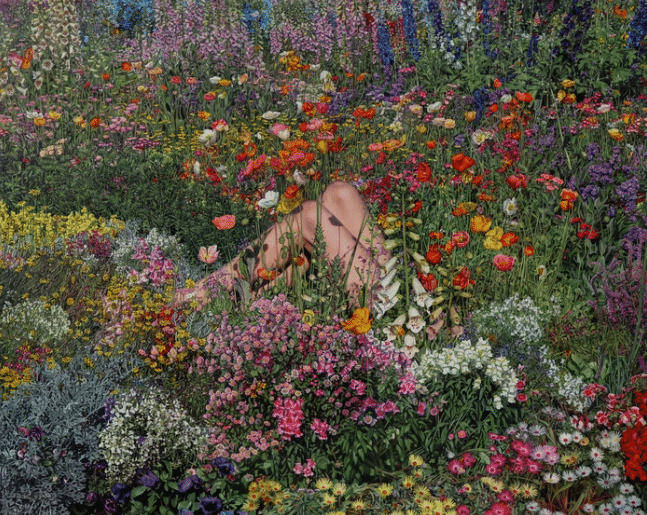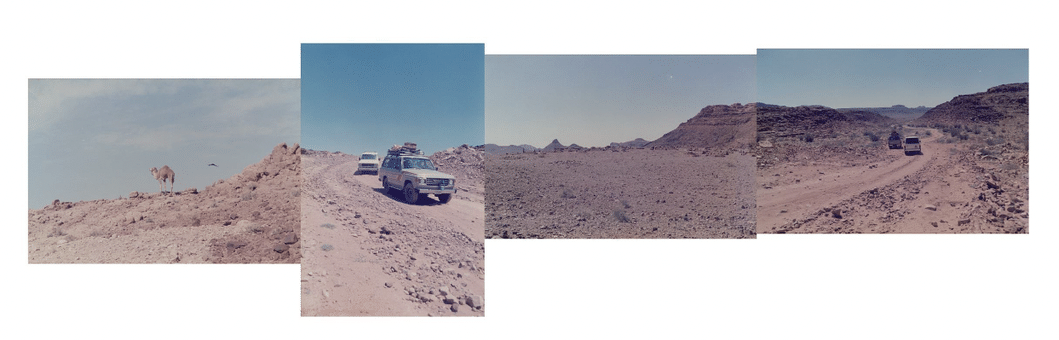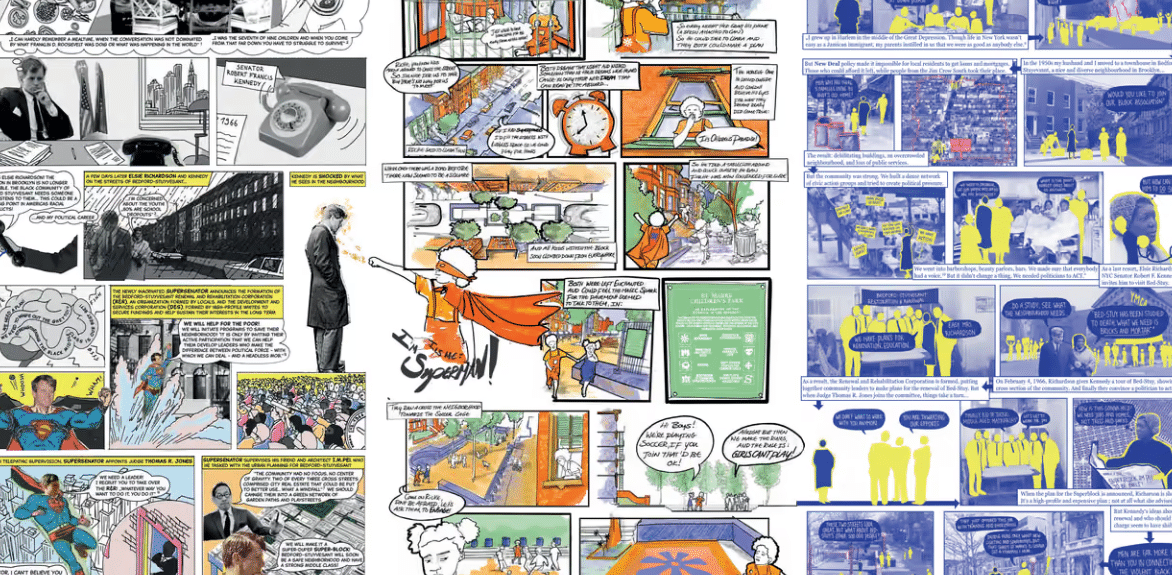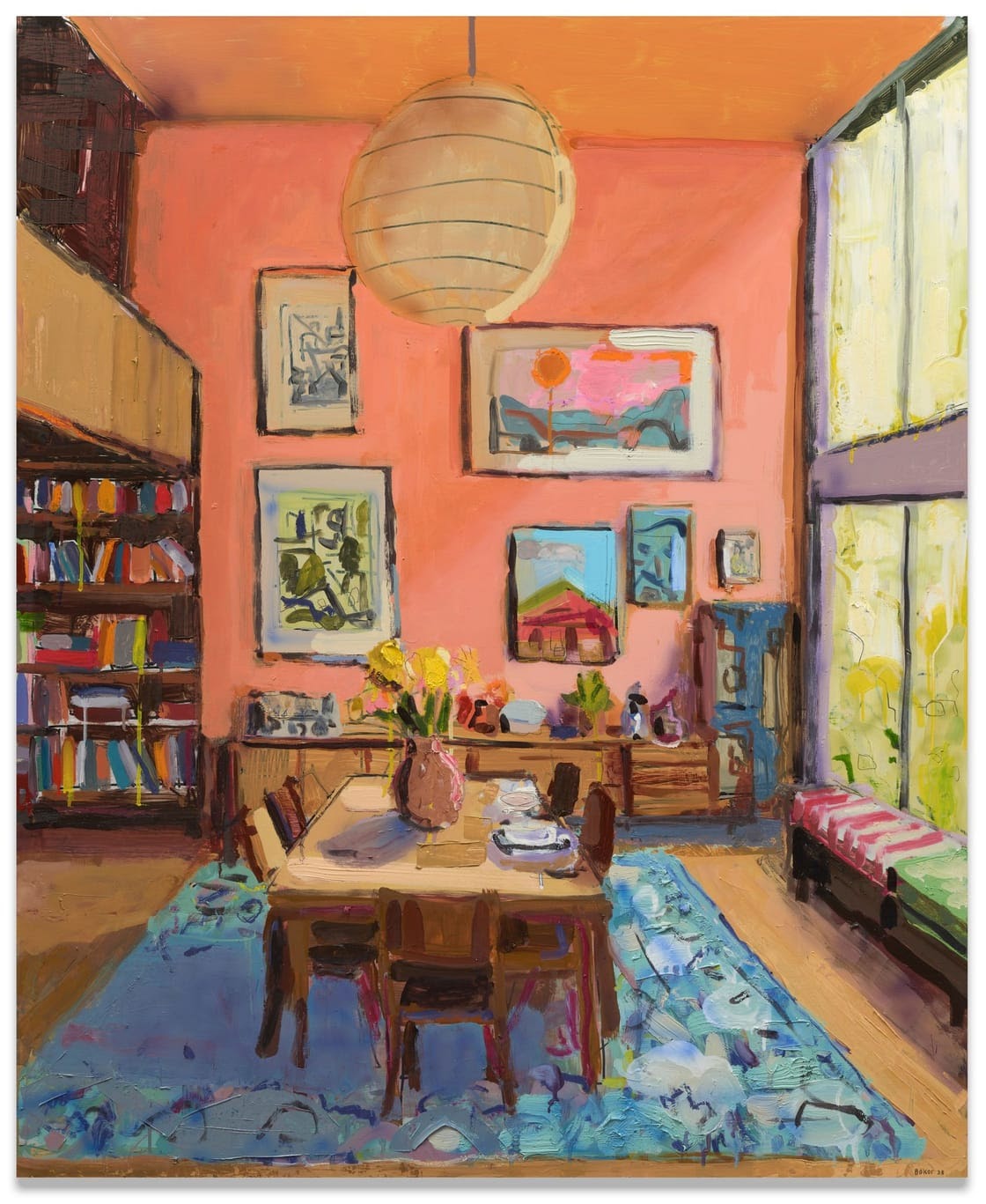
Lawrence Daws (1927–2025) is a major figure of modern and contemporary Australian art. He sustained a successful career as a painter and printmaker for over a half a century. Daws’ depictions of the Australian landscape are as unique as the psychological landscapes he often grafts within them. His works are a personal journey of self-awareness and discovery, and often about the formal qualities of paint itself – “Even when a painting is full of menace, I try to paint it in a beautiful way so you’re seduced by the paint quality and you don’t get subsumed by the horror.”
Growing up on the Fleurieu Peninsula in South Australia, Daws studied engineering and architecture at the University of Adelaide before moving to study at the Melbourne National Art School between 1950-1953. He first attracted serious critical attention when he co-exhibited with Donald Laycock, Clifton Pugh and John Howley at the Victorian Artists Society gallery in Melbourne in 1955.
After winning the Italian Travelling Scholarship in 1957, Daws lived and worked in Rome before moving to London in 1960, where he lived for the next ten years. During this period, he travelled extensively throughout Europe, Russia, India, Mexico and the USA. He held solo exhibitions in London during this time and in 1961 he was selected to participate in the Whitechapel and Tate Gallery exhibitions of Australian Art. He also represented Australia, alongside Charles Blackman and Brett Whiteley, at the Second Biennale des Jeunes in Paris in 1962.
Returning to Australia in 1970, Daws lived on Queensland’s Bribie Island for four years where he became friends with Ian Fairweather. From 1974 until 2010, Daws lived at Owl Creek farm, Beerwah by the Glasshouse Mountains on the edge of a Queensland rainforest, where many of his best-known works were created. From 1977 Daws was a Trustee of the Queensland Art Gallery. In the 1980s Daws started making computer prints, and was possibly the first established Australian painter to use this medium.
Daws has won numerous awards including the Dunlop Prize twice (1953 and 1954), the Italian Travelling Scholarship (1957), the International Award, Biennale des Jeunes, Paris (1962); Silver medal in the Bienal de San Paolo, Brazil (1963); and the Georges Art Prize, Melbourne (1977). A biography of Daws was published in 1982, written by Neville Weston. In 1992 he received an honorary doctorate from Griffith University and in 2000 received an honorary doctorate from University of the Sunshine Coast.
Lawrence Daws’ work is held in all major Australian public collections, as well as public collections overeas including Auckland Art Gallery Toi o Tamaki, Auckland; National Gallery of China, Beijing; Scottish National Gallery of Modern Art, Edinburgh; Tate Gallery, London; The Royal Society, London; The Victoria and Albert Museum, London; Yale University, New Haven, USA; Shanghai Art Gallery, Shanghai; and Musée des Beaux-arts de L’Ontario, Toronto.
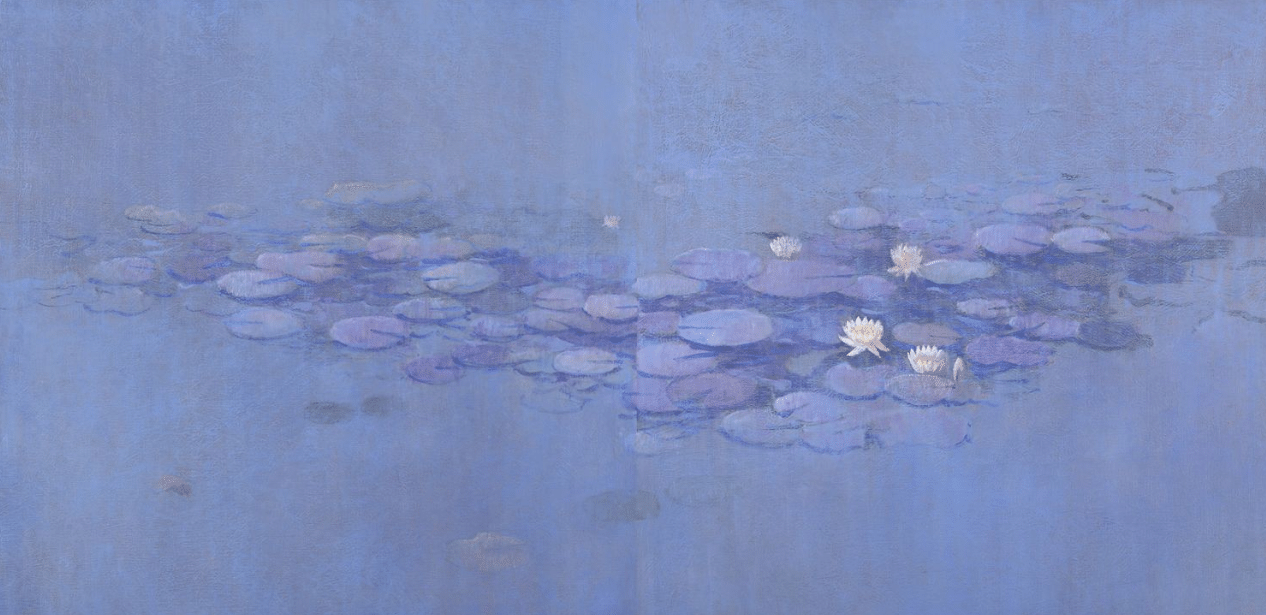
Image: Lawrence Daws, The blue pool, 2012 oil on canvas (diptych), 152 x 305 cm