Karen Black’s practice operates in a state of constant tension – between abstraction and figuration, vulnerability and resolve, myth and autobiography. What she builds is not a world of fixed forms, but a charged space where emotional states are unearthed through gesture, where identity slips its frame, and where slowness becomes a kind of political urgency. In Black’s universe, paint doesn’t merely depict – it feels, it remembers and it exposes.
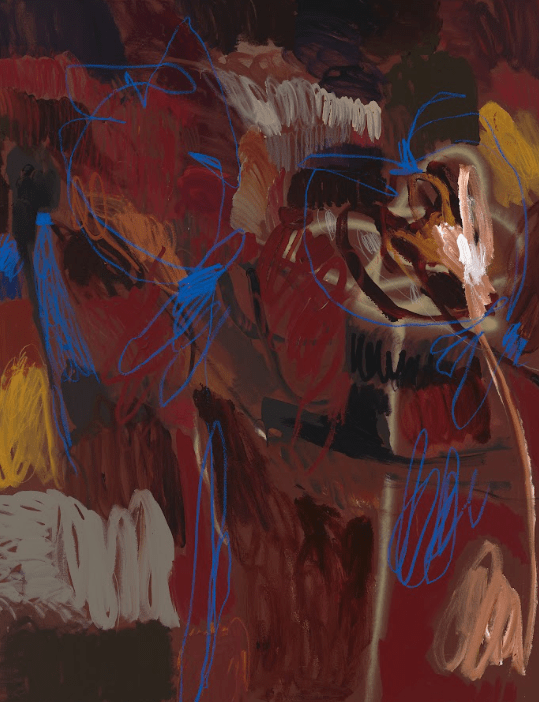
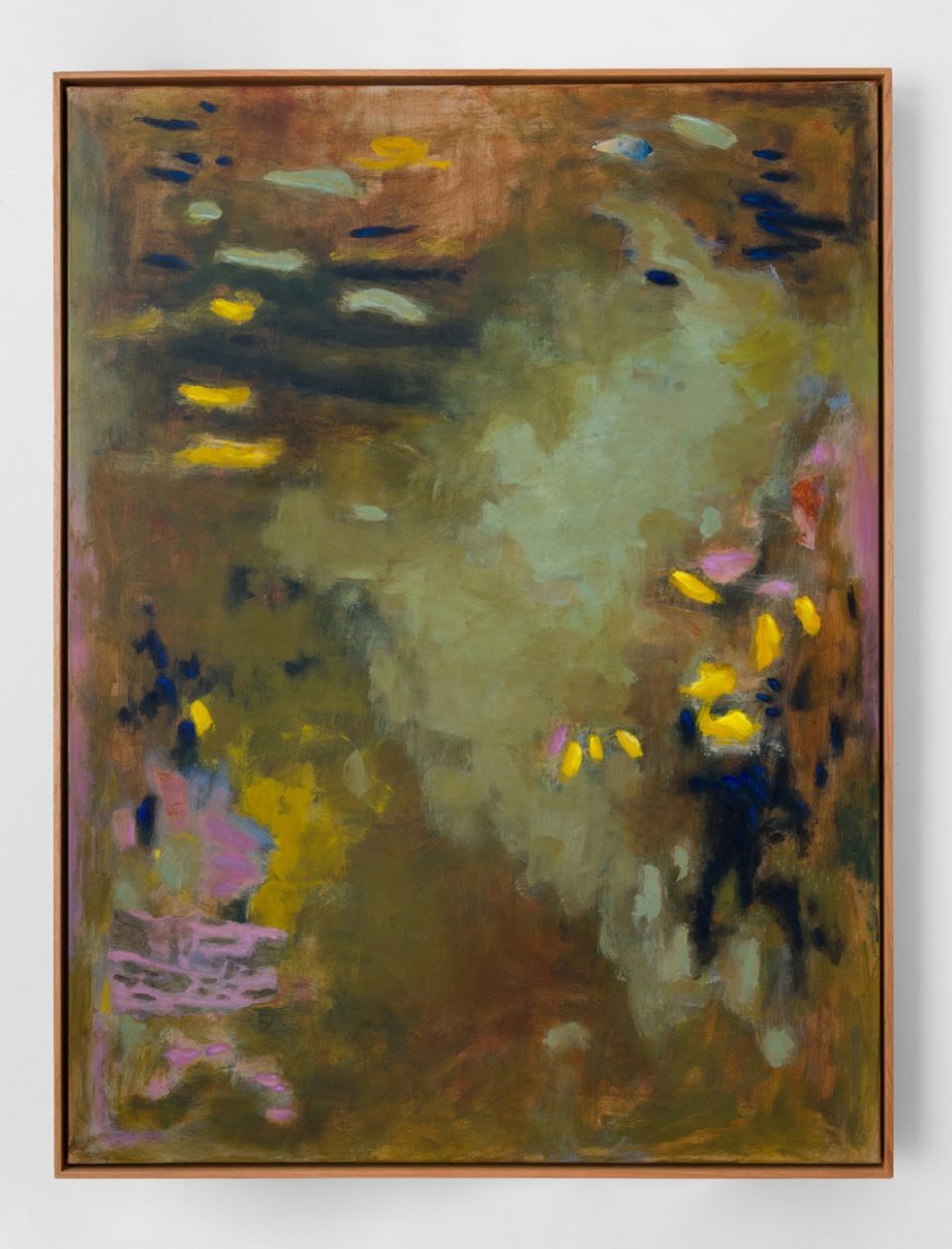
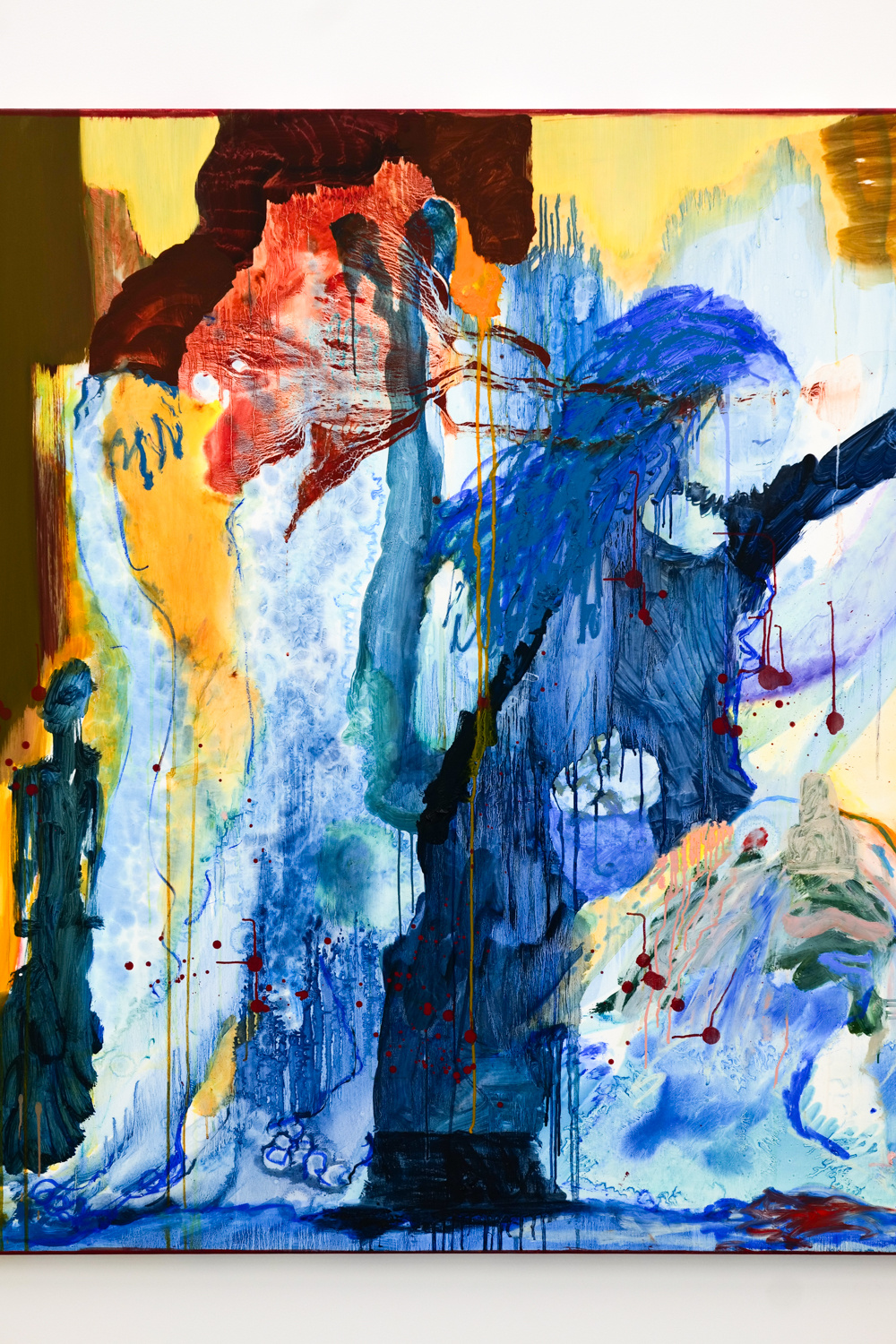
Though grounded in the language of painting, her work resists categorisation. Mottled, scarred and guided by intuition, the surfaces recall the raw nerve of mid-century expressionism, yet are equally attuned to the psychic topographies of feminist revisionist histories. She renders bodies that are in flux. Her torsos tilt into landscapes, limbs mutate, faces blur, and the figure, rather than being anchored, becomes atmospheric. Her paintings are a mist of memory, sensation and story. They are psychic diagrams and inner weather systems distilled and translated through paint.
What holds all of this together is her insistence on painting not as a system of representation, but as a mode of embodied thinking. Not merely illustrating ideas, Black metabolises them. In a cyclical, recursive, and resolutely physical process Black enacts a kind of emotional archaeology. Paint is laid down and pulled back, scraped and softened until what remains is less an image than an accumulation of energies. There is no attempt at closure. Everything is provisional, gently unstable, yet rigorously composed.
She leans into the contradictions of living – the mess, the mundane, the longing and the haunted spaces between self and other. Her brushwork often hovers at the edge of erasure. Ghostly silhouettes are rendered in pastel violets, dirty reds and stormy greys. Figures seem to emerge from a dream-state with edges broken and proportions unstable. Some drift across vast blank spaces whilst others are hemmed-in by window-like frames or domestic interiors that might read as either protection, or containment, or both. But if Black’s work explores confinement, it does so with a radical empathy. Her bodies tend not to posture. They wilt, stretch and fold in upon themselves. They breathe, offering us images of the strangeness of our flesh in moments of grief, intimacy or repair.
In this sense, Black’s work is less about painting the body than about painting through it. This becomes even more pronounced in her ceramic and sculptural works, where bodies are reconstructed as unstable towers of limbs and torsos, genderless and precariously stacked. Her ceramics speak the same language as her paintings: textured, bruised and held in suspension. They teeter between figuration and collapse. The result is an an almost devotional engagement with the body as a site of both trauma and resilience.
Black’s relationship to narrative is somewhat fractured. There are perhaps hints here and there – a title, a gesture, a half-seen expression. But there is never a clear beginning, middle, or end. Instead, her paintings operate like memory itself: fluid, partial and imprecise. Her titles feel like emotional footnotes – enigmatic, fragmentary and intensely lived. There is often a sense that the narrative has been lived and survived, and what we’re witnessing is the residue.
If Black’s paintings are emotional maps, they are also geopolitical ones. Her practice is rooted in the politics of care, and of attention particularly to the stories of women and the historically invisible. She has produced works informed by firsthand encounters with displaced communities and refugee children. Yet these works never veer into didacticism or documentation. Her painted response is always felt before it is seen and this restraint and refusal to use suffering for a didactic or rhetorical purpose is part of her ethical rigour.
Karen Black’s practice is a refusal of resolution and a commitment to tenderness through a philosophical approach to painting that sees it not as fixed representation but as a site of encounter. Her work asks nothing less of us than to feel – fully, vulnerably and unflinchingly. In return, her paintings and sculptures offer a space where softness is not erasure, but resistance – and where the act of painting is not a performance, but a deeper experience of living and having lived.